As I write this the Queensland State government are calling for feedback on their inquiry into e-bikes, formally “Parliamentary Inquiry into E-mobility safety and use in Queensland”.
Following the inquiry, recommendations were made which included licenses for e-bike users, age and speed limits.

The Queensland Labor Opposition made a Statement of Reservation which is in the report (pp.159) and which shows a better understanding of the problem, rather than the broad-brush approach adopted in the inquiry. It states in part:
Pedal-assist e-bikes are limited to 250 watts of continuous power, with motor assistance cutting out at 25 kilometres per hour. Assistance only operates when the rider pedals and these e-bikes fall into the European (EU) standard (EN 15194).
Stakeholders expressed strong support for pedal-assist e-bikes due to their natural speed control and predictable movement which aligns with the expectations of pedestrians and other cyclists.
In contrast, stakeholders warned the committee about safety concerns with throttle-controlled and high-powered devices. Stakeholders told the committee that instant power, higher speeds and abrupt acceleration increase the likelihood of serious injury, particularly on footpaths and shared paths and that these devices are often marketed to younger and less experienced riders.
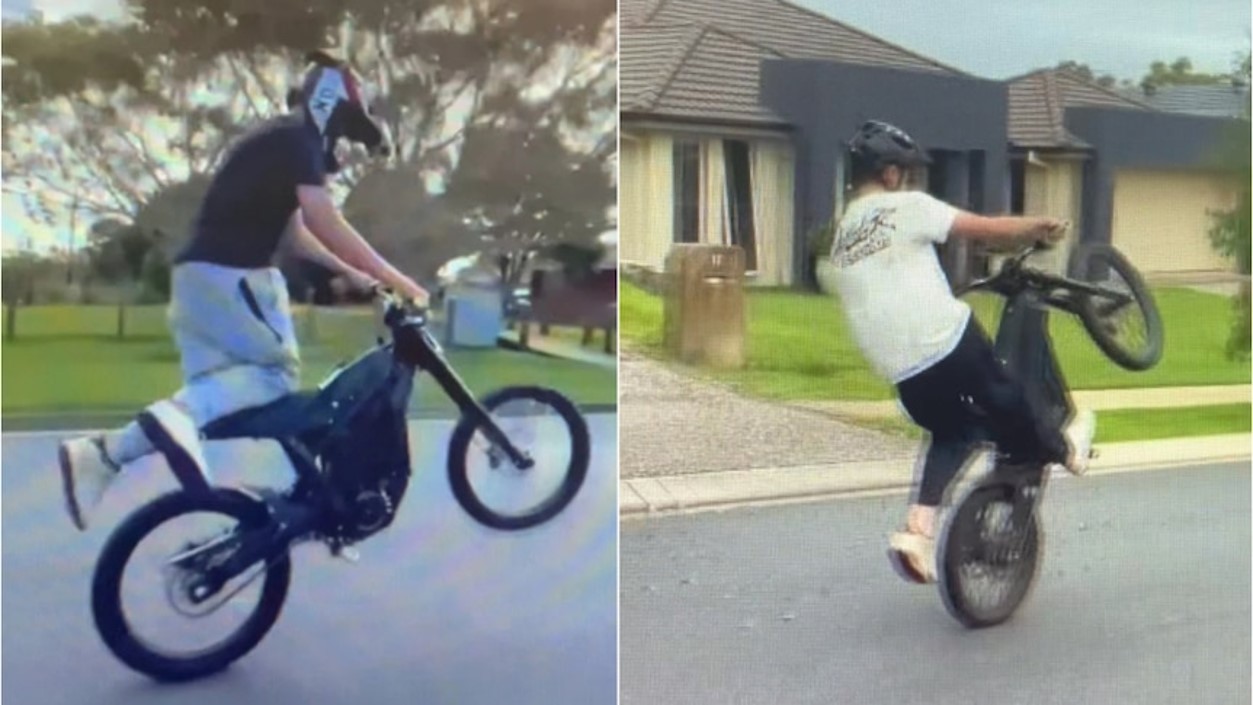
While the government rightly mentioned the rise in deaths in teenagers and children associated with mobility devices, they have been incorrectly attributed to “e-bikes” when it is evident that they are electric motorbikes and heavily modified or unregulated bicycles capable of high speed. These are not e-bikes at all. And the problem with this is that there is potential for users of legal pedal-assist bicycles as they are defined in legislation, to get caught up in a range of proposed measures to solve a problem that does not exist with e-bikes.
This is not an issue unique to Queensland, rather a global phenomenon as e-motorbikes and similar (in Queensland at least) unregulated vehicles are used illegally by a typically teenage cohort in a dangerous manner. It is a failure of legislation everywhere to keep pace with technology.
Some have stated that existing laws should simply be enforced. Police have stated it’s not that easy.
Police told the committee that enforcement is occurring but is highly resource-intensive and difficult to sustain. Inspector Gareth Bosley explained that in high-risk areas “in excess of 80 per cent of people… simply avoid engaging with police”, making safe interception difficult.
The committee was told that police officers struggle to identify illegal devices at the roadside. Power output and software modifications are not visible.
In a recent event in the Brisbane business centre, about 20 people on machines including e-motobikes and high powered modified bicycles rode through and around town at high speed for more than 20 minutes. Police caught two, one probably because he fell off his machine. These are people with no regard for the law or consequences.
Without drilling into the recommendations or offering solutions, below are some observations from California where this is also a big problem and where they have taken a different approach. Here’s hoping the outcome of the inquiry is sensible legislation that supports safe e-mobility without imposing hardship on those doing the right thing.
Resources
- Parliamentary Inquiry into E-mobility safety and use in Queensland (recommendations pp xi)
- California’s SB 1167 Could Finally Separate E-Bikes from Dangerous E-Motos
- Should e-bike riders be licensed?
- Queensland e-bike rules